AI-Enabled Sustainability: Turning Hotel Guests into Active Participants
What Guests Actually Want
Research from Rotterdam School of Management shows guests support sustainability but need visible, personalized AI tools to drive actual behavioral change in hotels.
A Question That Shifted the Room
During a thesis consultation session, a simple question was raised about sustainability in hospitality. I asked the group who genuinely cares about being environmentally responsible when travelling. Nearly every hand went up.
Then I asked who actually changes their behaviour once they arrive in a hotel.
Silence followed. Hands retreated. One student admitted, I plan to, until I am on holiday. Then I want things to be easy.
That moment captured something many hotel professionals already sense. Guests support sustainability in principle, but convenience still dominates their decisions. This observation inspired a research project that I later supervised with master’s student Heleen Aertsen at Rotterdam School of Management, Erasmus University, exploring why current initiatives fail to activate guest behaviour and what might genuinely work. These findings were presented at EuroCHRIE 2025 in The Hague.
Caring Does Not Automatically Create Action
Across 452 survey responses and 10 in-depth interviews, a consistent pattern emerged. The barrier is not awareness. It is activation.
Most hotel sustainability initiatives rely on polite signage or gentle reminders. These methods assume guests will change behaviour because it is “the right thing to do.” But when someone is paying for comfort, relaxation, and ease, guilt rarely influences decision-making.
At the same time, green certifications have become widespread. While valuable internally, they often blend together from a guest perspective. Sustainability becomes part of the background rather than a differentiating experience.
What Guests Actually Want
Interview feedback revealed something important: guests want visibility. One participant shared, “If the hotel showed me my impact in real time, like how much water I saved, I would feel good about participating.” Another said, “If I could track my footprint, I might even become competitive.”
Guests are not rejecting sustainability.
They are rejecting ambiguity.
They want clarity, feedback, and recognition. They want to see that their behaviour matters.
This directed our focus toward value co-creation, where guests help shape the outcome rather than passively observing sustainability messages.
How AI Can Transform the Experience
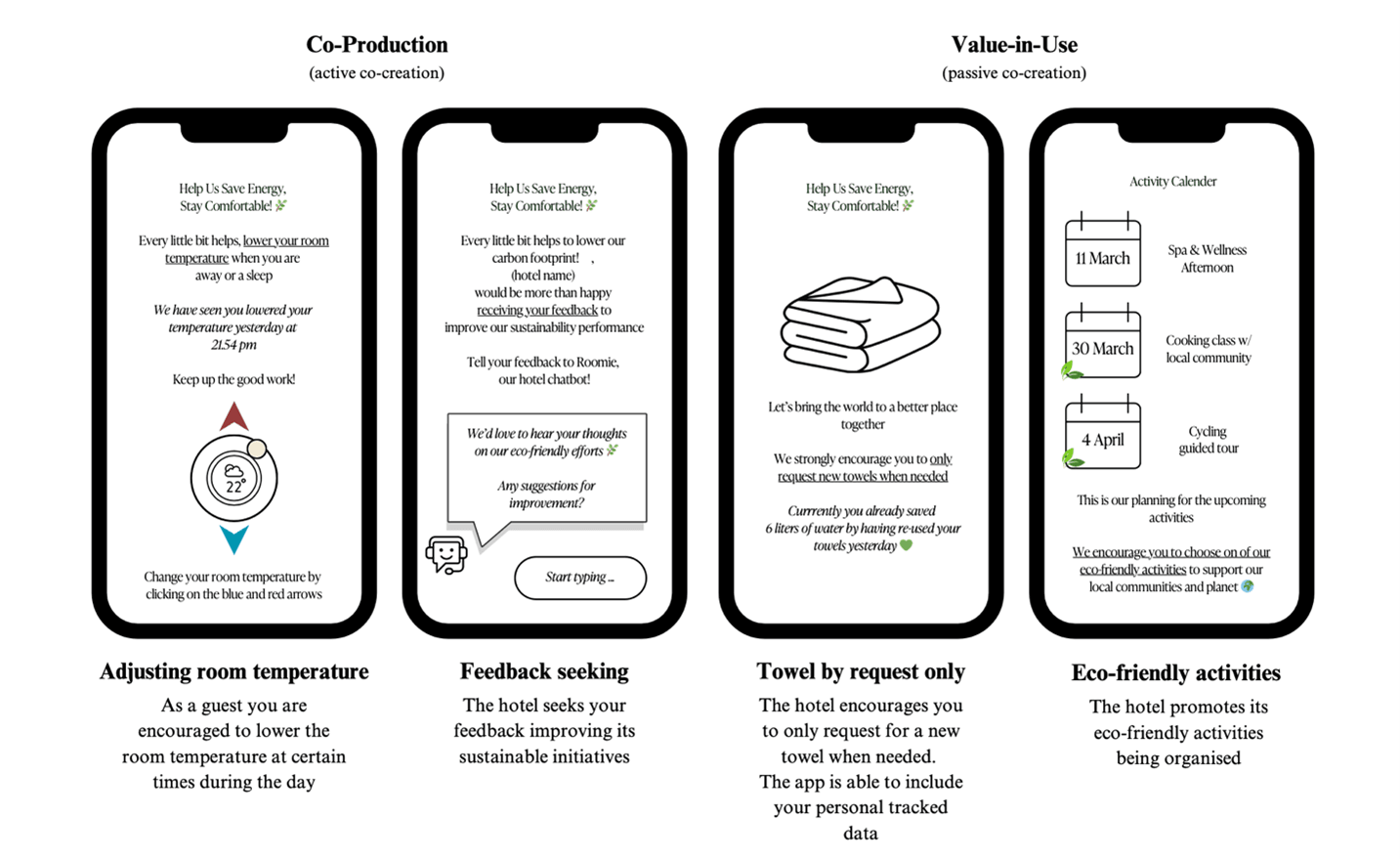
Artificial intelligence can make sustainability tangible and rewarding. Thoughtfully implemented AI tools can provide seamless and personalised experiences that encourage sustainable decisions without adding effort or guilt.
Examples include:
- Personalised recommendations for reducing energy or water use
- Smart nudges based on guest preferences and patterns
- Real-time dashboards showing resource savings
- Suggestions for low-waste or local dining options
- Recognition and rewards for sustainable choices
Our analysis showed that when guests interact with these tools, they form an emotional attachment to the sustainable experience. That attachment significantly increases their intention to visit hotels offering such tools and their willingness to use them during the stay.
Remarkably, personal environmental values did not predict behaviour. Guests who consider themselves eco-conscious did not act differently inside hotels.
Emotion was the driving force.
When sustainability feels rewarding, guests repeat it.
What This Means for Hotels
For hospitality leaders, the implications are clear. Sustainability must evolve from silent signage to a visible experience. Emotional engagement must replace moral appeals.
Here are three strategic shifts hotels should consider:
1. Make Sustainability Visible
Show guests the immediate impact of their choices. Real-time feedback creates motivation and ownership.
2. Personalise the Experience
Generic reminders fade into the background. Tailored interaction feels relevant and helpful.
3. Reward Participation
Recognition and small incentives strengthen the emotional link between sustainability and satisfaction.
When hotels design for emotion instead of instruction, behaviour follows naturally.
Looking Ahead and Final Reflection
Industry and academic audiences will discuss how technology, design, and emotion intersect in hospitality sustainability. The next wave of sustainable innovation will not come from more certifications or policy statements. It will come from emotionally intelligent AI systems that make sustainability visible, effortless, and personally meaningful for every guest.
We do not fall in love with sustainability as a concept. We fall in love with how it feels to be part of a positive impact. Hotels that understand this emotional dimension will create stronger engagement, deeper loyalty, and measurable environmental progress. Those who continue relying on quiet signage may find that their message fades into the background, just like the towel card on the bathroom counter.
Take-home message: If sustainability is to drive real guest behaviour, it must be designed as an engaging experience rather than a passive instruction. By making sustainable actions feel rewarding, personalised, and emotionally meaningful, hotels can create a lasting impact that benefits both guests and the planet.
Comments
Comments for this content
0 comments available