The Difference Between a Proactive and Reactive Customer Service and CX Strategy
The definition of a proactive customer experience is simple. The company reaches out to the customer before they call about a problem. Sometimes the customer doesn’t even know there is a problem. For example, an Internet provider may experience an outage and send text messages to its customers with ongoing updates. That shows the company is watching out for the customer, and while customers may not love that there is a problem, they love the...
 The definition of a proactive customer experience is simple. The company reaches out to the customer before they call about a problem. Sometimes the customer doesn’t even know there is a problem. For example, an Internet provider may experience an outage and send text messages to its customers with ongoing updates. That shows the company is watching out for the customer, and while customers may not love that there is a problem, they love the information and have confidence that the company is doing something about it.
I recently interviewed my friend and fellow CX expert Scott McKain for an episode of Amazing Business Radio to discuss his new book, Beyond Distinction: How Leaders Transcend the Turbulence of an AI-Transformed World. He had a different take on proactive customer service and experience.
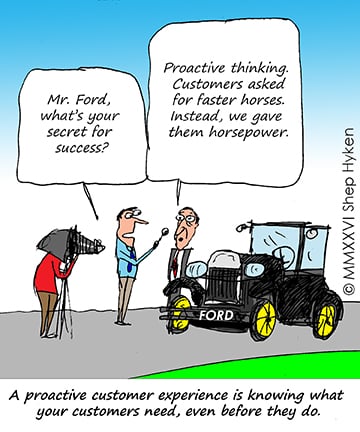
McKain’s version was to anticipate what a customer might need and act on it before they ask. When it comes to service, that may fall under the general definition of proactive service, but when it comes to the overall experience, it’s much bigger – and more exciting. McKain also includes providing services and products that they don’t yet realize they want. He quoted Henry Ford, who said, “If I asked my customers what they wanted, they would say, ‘faster horses.’”
Both versions of proactive service are important. The overall point is that we are always looking ahead of what our customers want and expect. We anticipate what they need, and we deliver. That results in a higher level of trust and confidence from our customers.
After McKain so eloquently described his nuance on proactive service, he took it to an even higher level, and that had to do with the flaw in a reactive service experience.
Being reactive is the opposite of proactive. Instead of anticipating what your customers want, you’re reacting to their calls, questions, issues, and complaints. And it’s even more than that. If you notice that your market or customers’ expectations are changing, you might react to keep up. Or, if you notice competitors are doing something you’re not, your reaction may be to copy or create something to catch up. Reacting is a losing strategy. McKain sums it up perfectly: “If you are constantly in reaction mode, it means you’ve already lost … you’re already behind.”
It’s impossible to completely eliminate being reactive. Sometimes you don’t know about a customer’s problem unless they tell you. You may not notice a change in the market immediately, but ideally, in a short time, you spot the issue or trend. That response is reactive, but the effort to uncover it is proactive.
So, the choice is simple. You can wait for customers to tell you what’s broken, what’s missing, or what they expect next, or you can design a process or strategy that gets you there first. A proactive customer experience builds confidence. Reactive strategies don’t.
Comments
Comments for this content
0 comments available